UIUX Case Study
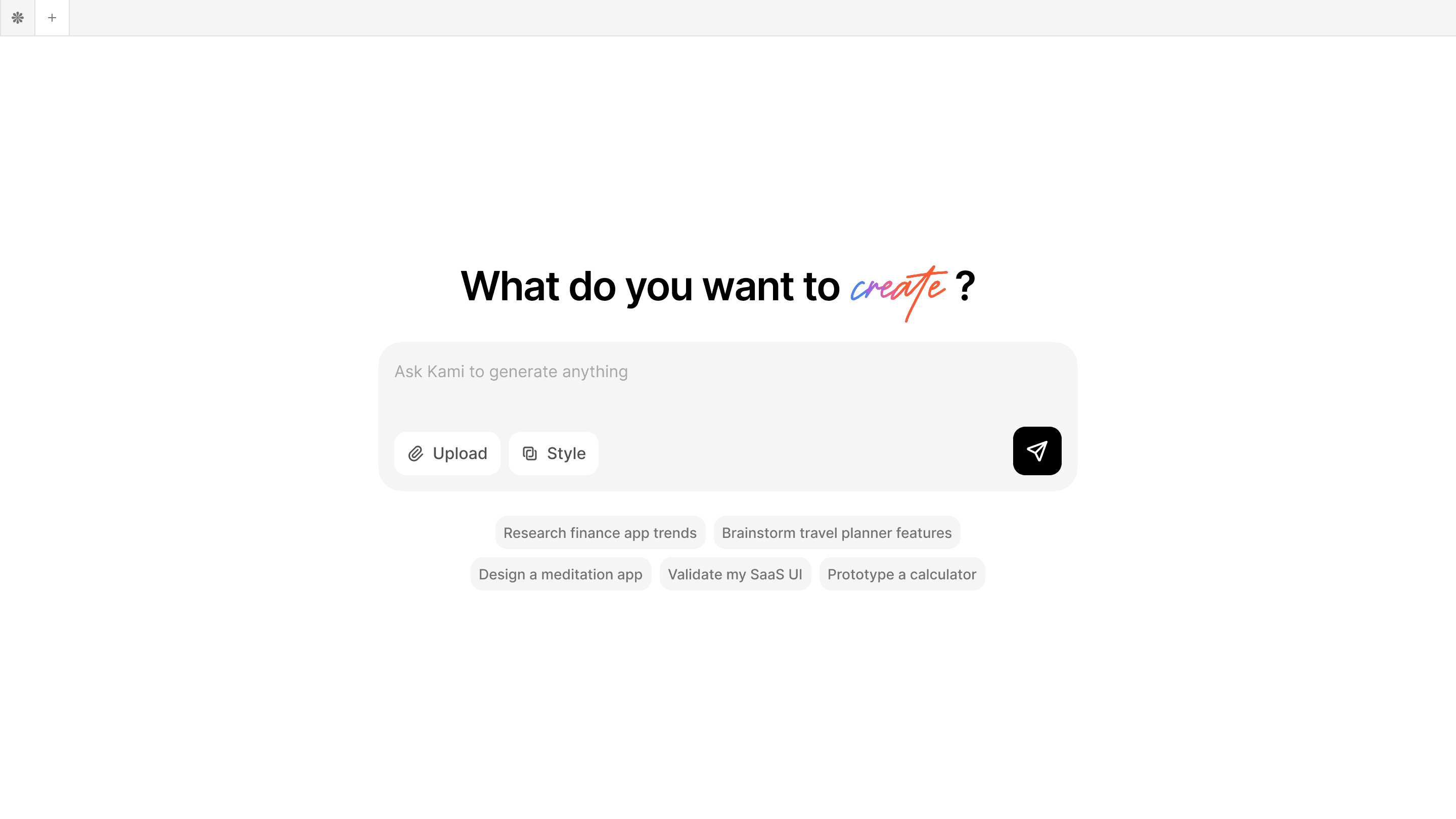
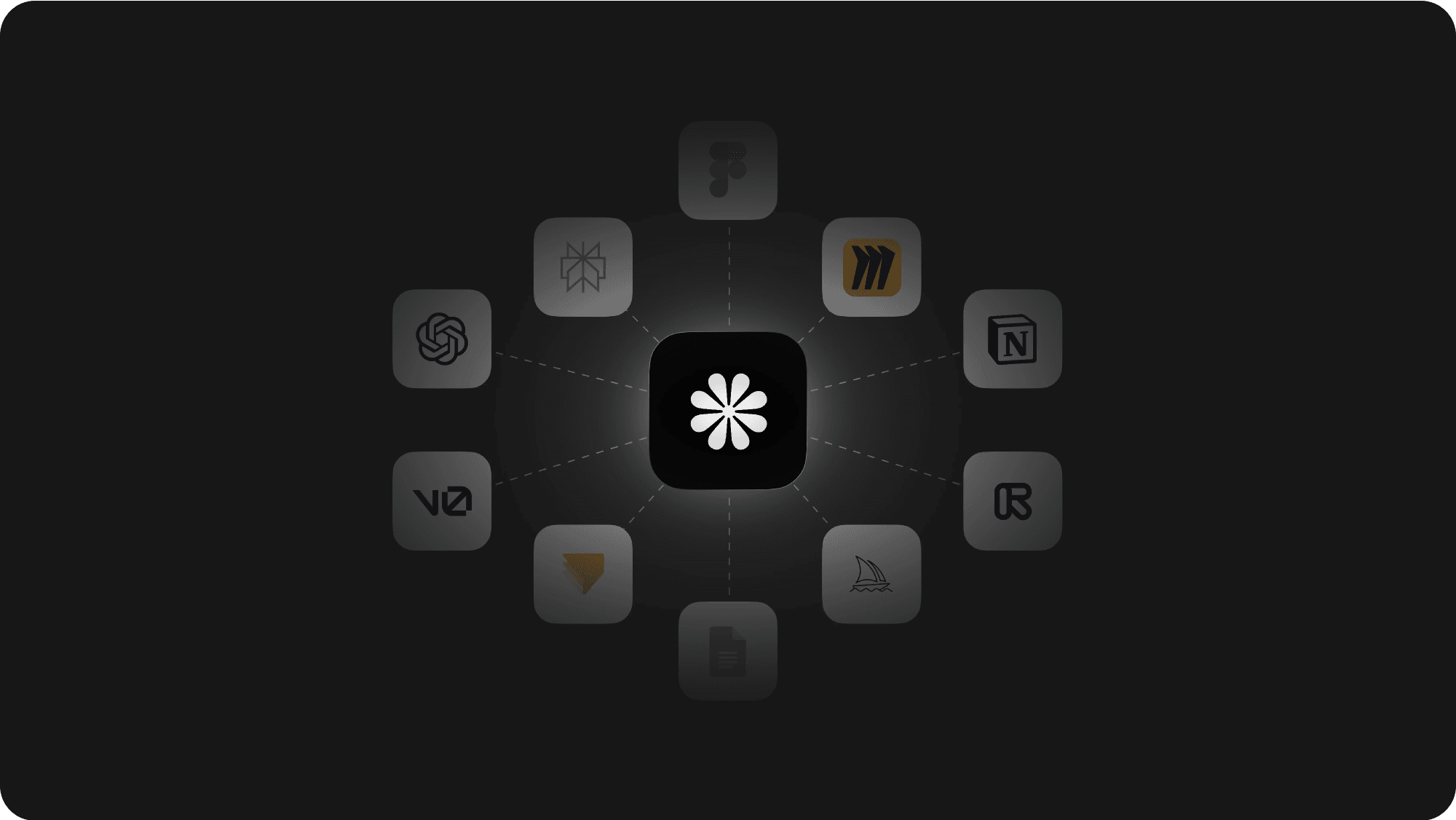
Kami is your AI co-pilot for product design, guiding you from research to design without tool overload, messy data, or creative burnout.
UIUX Designer, Product Designer
Jinghan Feng, Clayton Lin, George Kim
Figma, ProtoPie
Jan.2025-Apr.2025
The Problem
Overview

The Solution
Final Output
Ideation
Primary & Secondary Research, Competitive Analysis, Low-Fidelity Wireframes, Usability Testing
Design
High-fidelity mockups and Interactive prototypes
Test
Future Goals and What I learned
Primary Research
To better understand designers’ current workflows, challenges, and attitudes toward AI tools, we conducted 10 in-depth interviews and collected 55 questionnaire responses.
Participants included designers from big tech companies, startups, and universities.
find it time-consuming to synthesize large amounts of data
think AI designs lack variety and creativity
editing AI designs takes a long time
think AI output quality is unreliable for design.
Secondary Research
We started with market research, we focused on two main categories: UI/UX design tools and AI-powered design tools. Both markets are experiencing rapid growth in the coming years.
At the same time, more product designers are turning to AI tools to streamline their workflow, moving beyond traditional software like Figma and Sketch.

Competitive Analysis
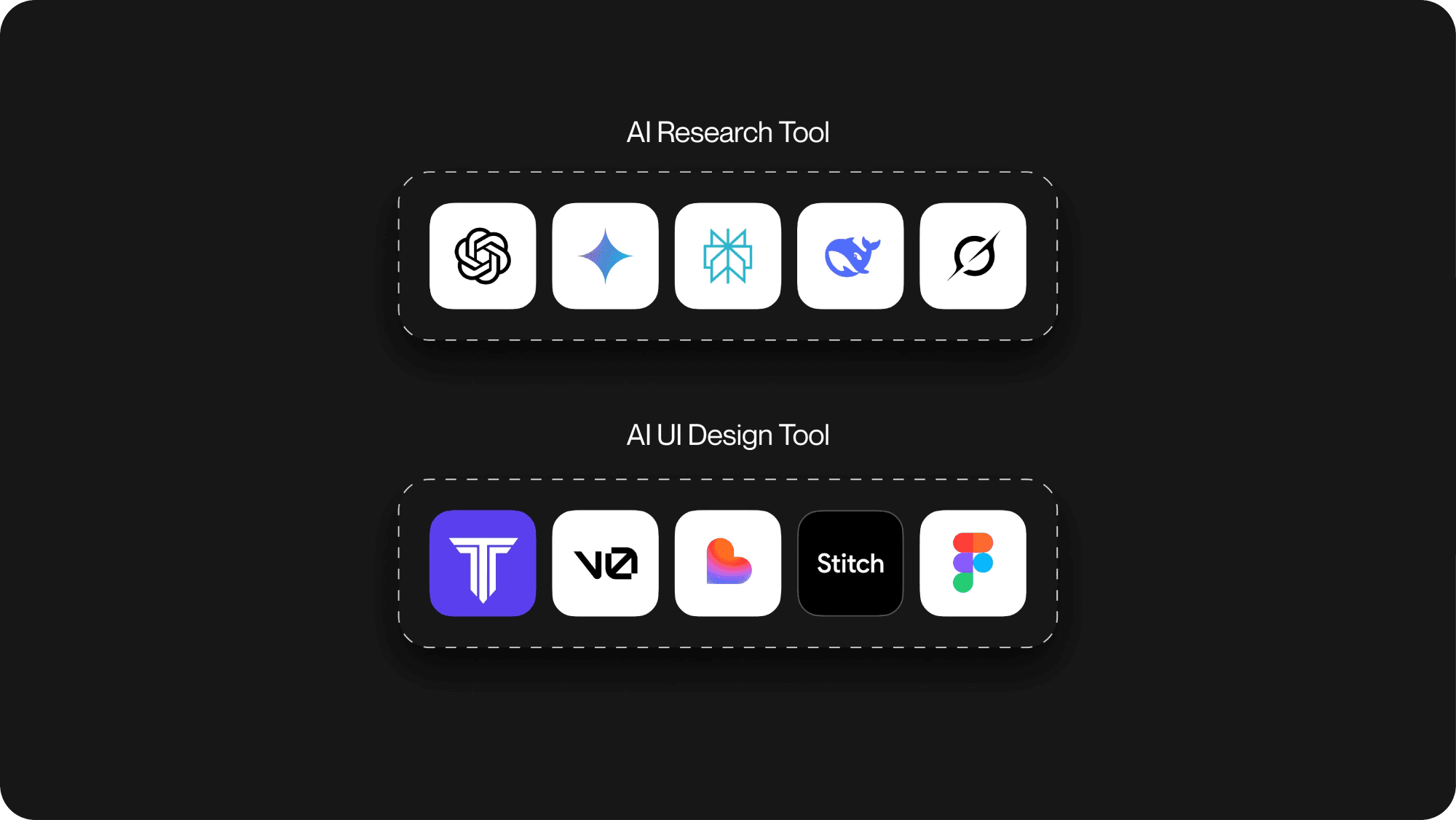
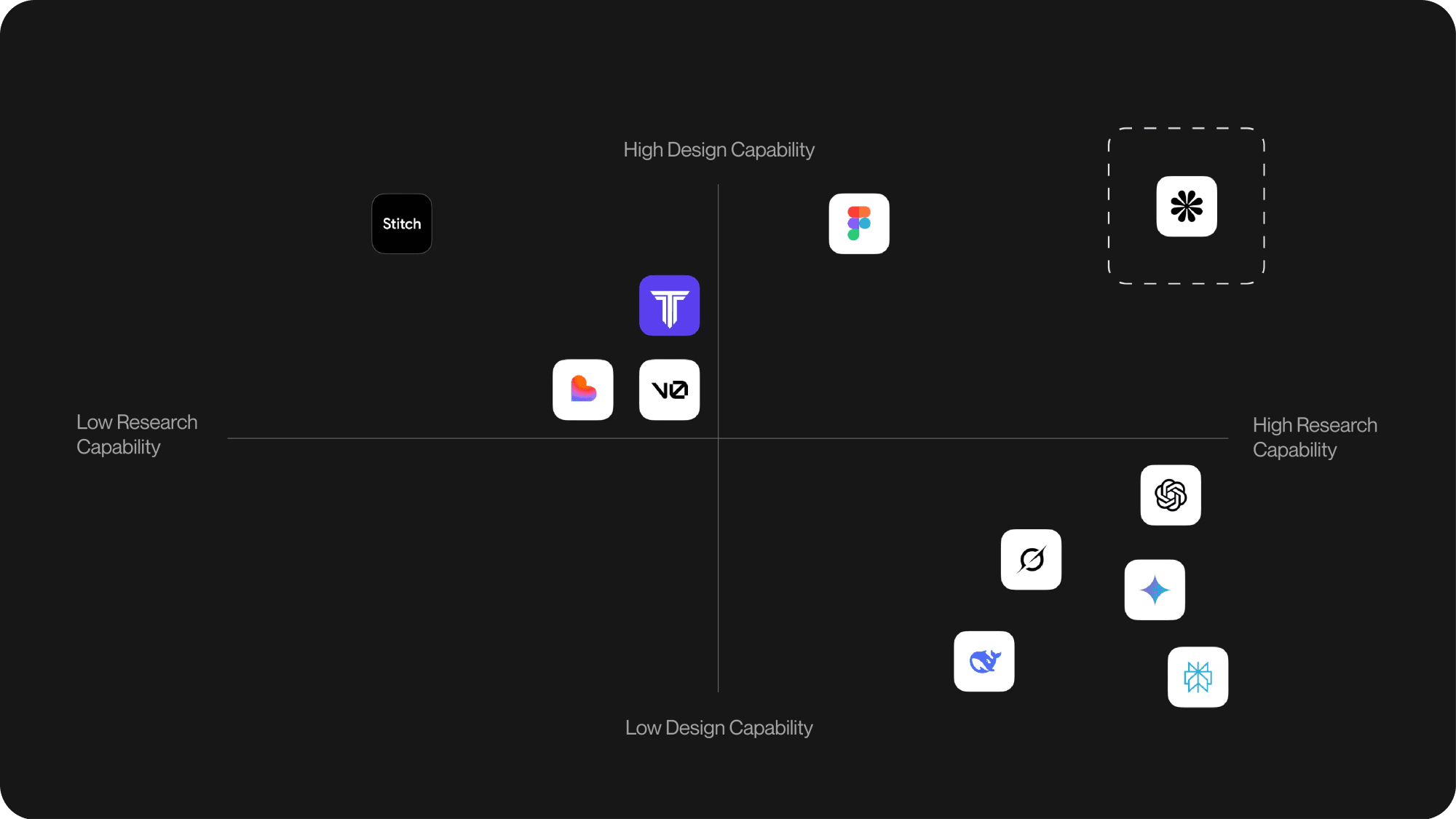
To identify gaps in the current landscape, we tested 10 leading AI tools across two domains: research and UI design.
Low-Fidelity Wireframes
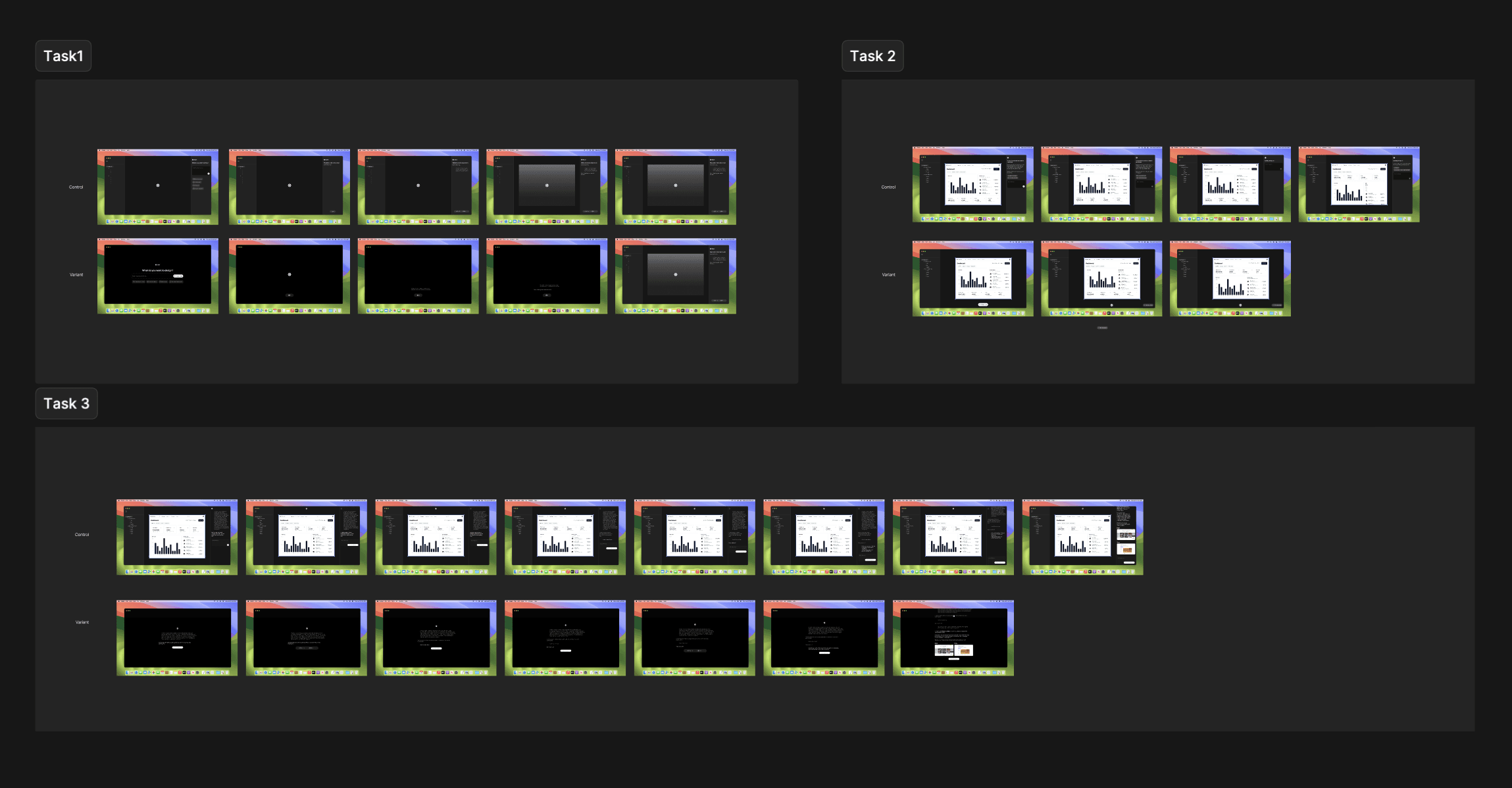
For the first version, we built three user flows into a clickable wireframe prototype: initiating AI interaction, using AI for research, and generating designs with AI.
Usability Testing
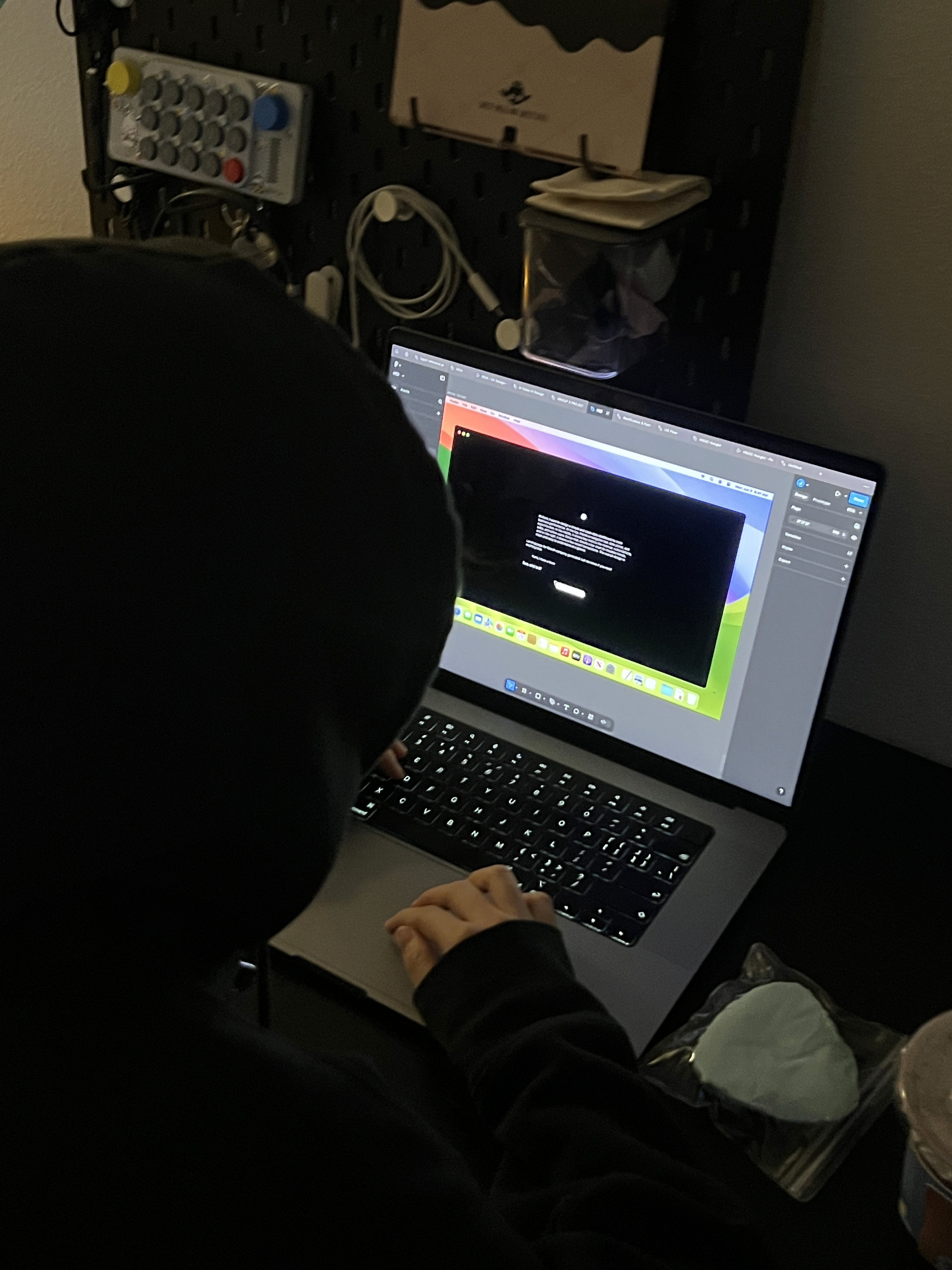
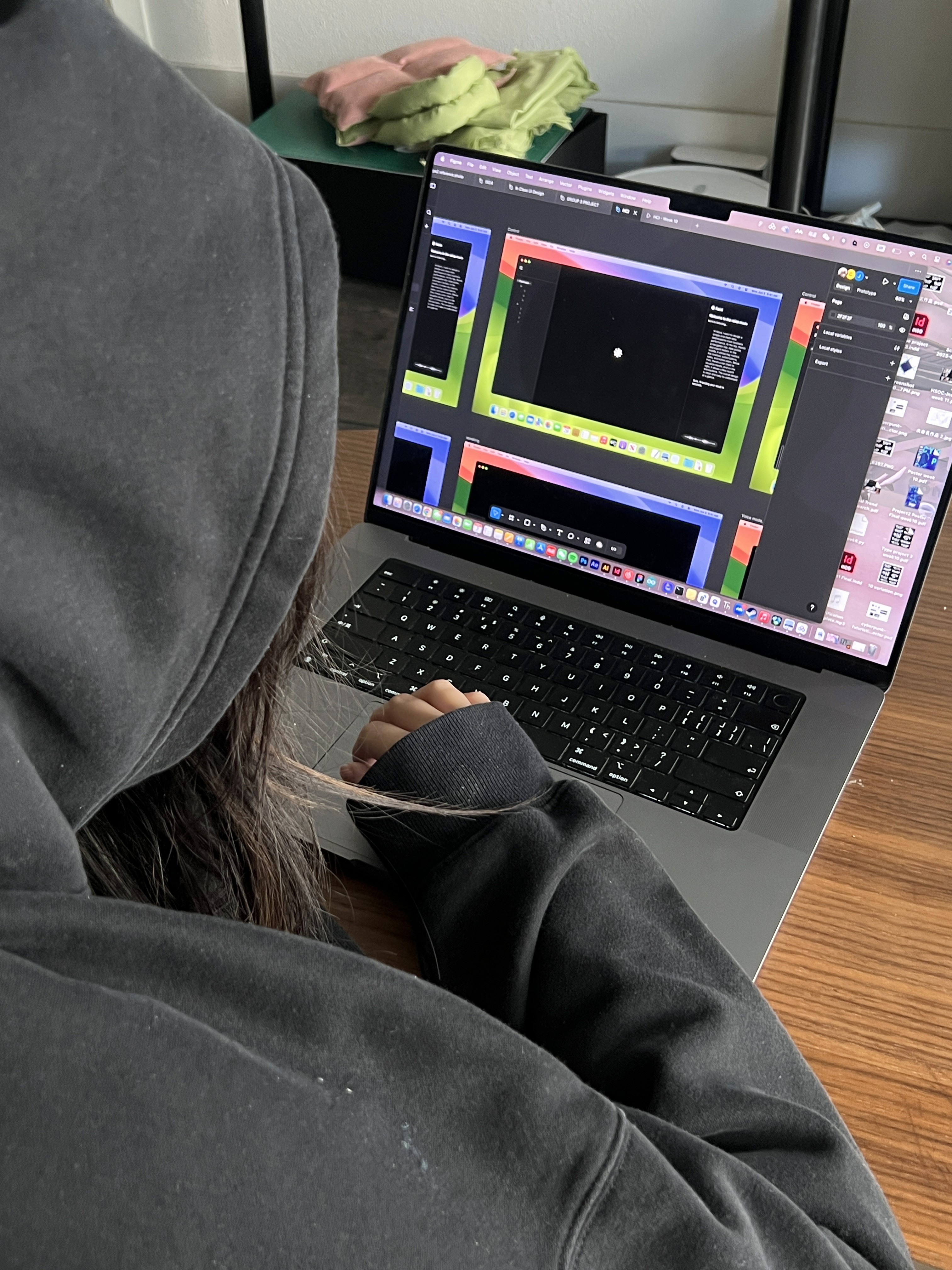
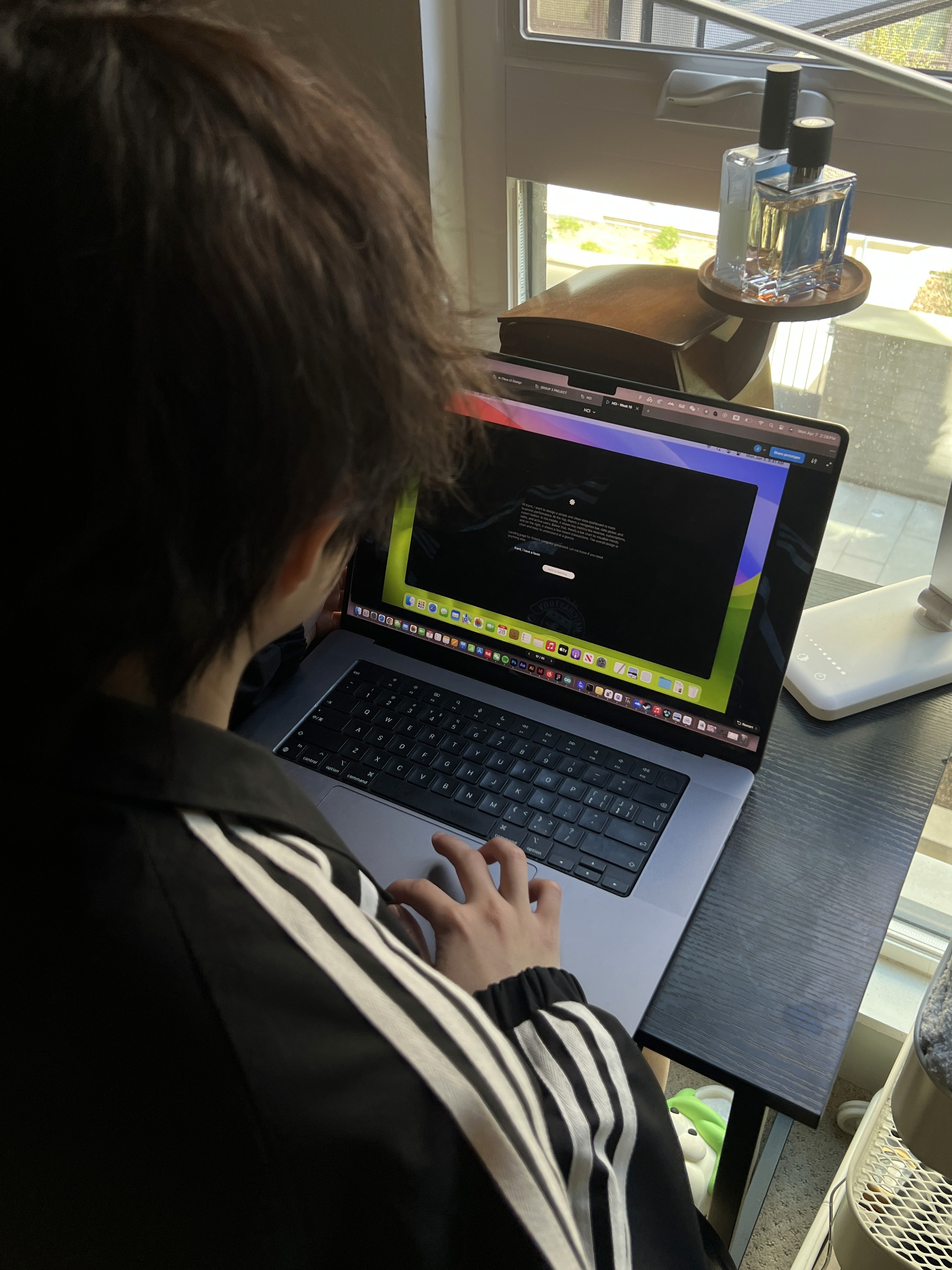
We tested the three flows with over 30 designers from diverse backgrounds, gathered their feedback, and iterated on the design. This testing process went through more than three rounds.



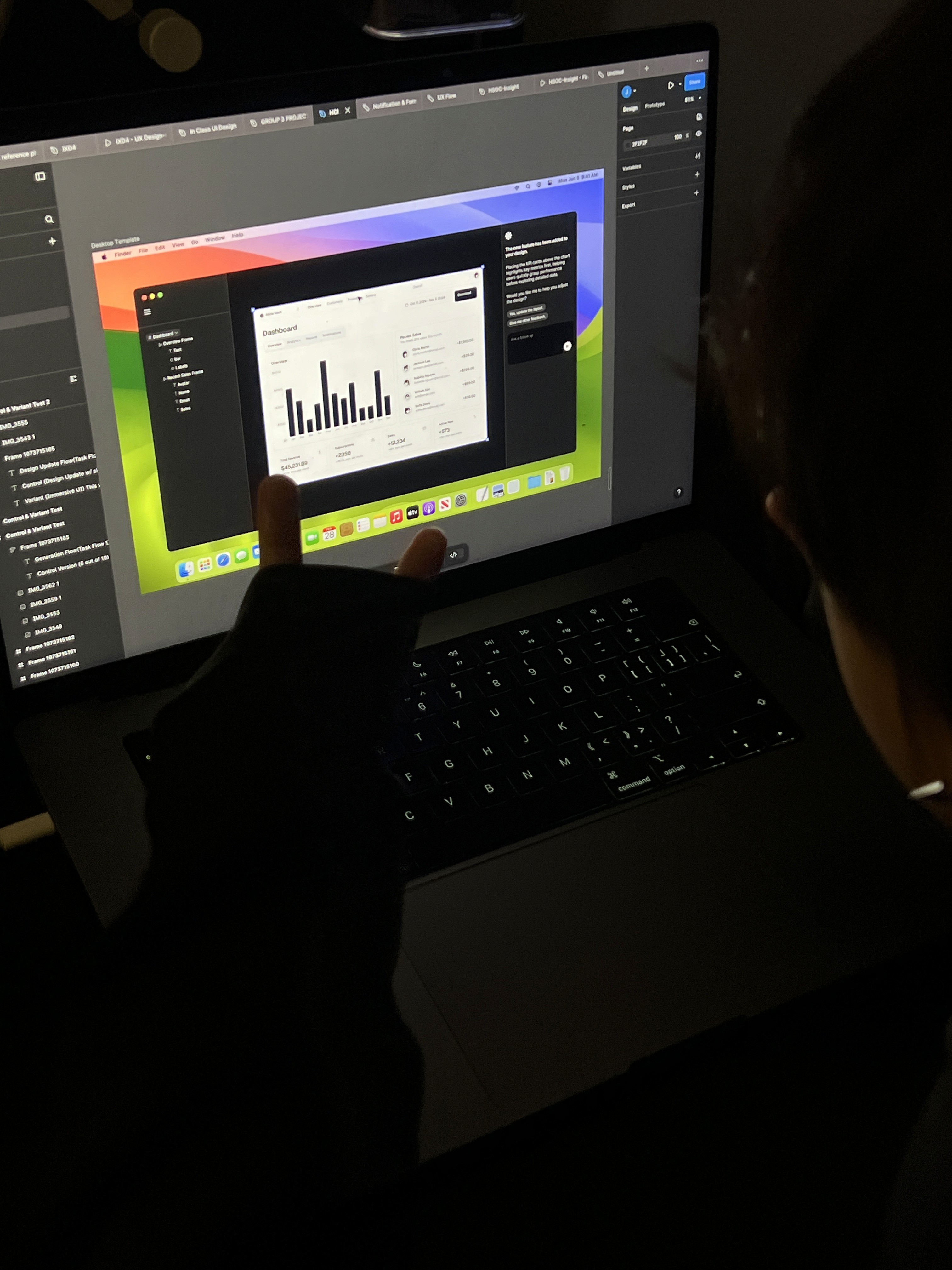
Final Design
After multiple rounds of testing and iteration, we arrived at a streamlined layout that supports fast, flexible, and focused design work.


Future Goals
We’ll train the AI on a larger dataset of diverse UI styles. Then we’ll connect APIs from different tools to build a full product platform.

What I learned
Although artificial intelligence has become widespread, people still have concerns about its accuracy and randomness. Therefore, when designing ai, it is best to provide some optional questions to help users accurately describe the problems
